Apple Phases Out More Fan-Favorite Devices: Full List of Vintage and Obsolete Models Revealed
Apple Phases: Apple has quietly but definitively refreshed its internal support records, initiating a routine yet significant shift that moves several beloved products into the Vintage and Obsolete categories. This crucial update impacts millions of users globally who rely on older generations of iPhones, iPads, smartwatches, and accessories. While Apple never makes a major public announcement about these policy changes, the updated official documentation sends a clear, irreversible message: official repair options for these legacy devices are now severely limited or have been completely terminated. This systemic Change forces owners to reassess the viability of their long-serving hardware and begin planning for eventual replacement or reliance on independent service channels.
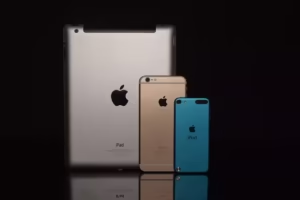
The First-Generation iPhone SE: Officially Obsolete
The original iPhone SE, released in 2016, a compact powerhouse still adored by a fervent user base, has crossed the crucial seven-year support threshold and is now classified as officially Obsolete. This model was a fan favorite, blending modern internals with the cherished 4-inch classic form factor of the iPhone 5S. Despite being discontinued in 2018, its perfect blend of pocket-friendly size and capable internals ensured its longevity. With the obsolete status now enforced, neither official Apple Stores nor authorized service providers will supply replacement Parts or perform any hardware repairs. Owners who continue to cherish the small form factor must now pivot exclusively to independent repair shops or rely on community workarounds to keep their device operational.
2017 12.9-Inch iPad Pro: ProMotion’s First Casualty Joins the Obsolete List
Another device beloved by creative professionals, the second-generation 12.9-inch iPad Pro from 2017, has also been decisively moved to the Obsolete category. This model was a technical milestone, introducing the stunning ProMotion 120 Hz display and the powerful A10X Fusion chip, which allowed it to handle illustration, video editing, and complex Multitasking remarkably well for years. Unfortunately, the same seven-year rule dictates its fate: official hardware service has ceased. Replacement screens, logic boards, and crucially, battery replacements, are no longer available through authorized Apple channels, pushing power users toward an inevitable Upgrade Timing.
Stylish Smartwatches: Apple Watch Series 4 Editions Turn Vintage
The premium and stylish Apple Watch Series 4 Nike+ and Hermès variants, originally introduced in 2018, are the latest smartwatches to enter Vintage territory. These models were transformative, bringing key features like the larger, thinner display, built-in ECG functionality, and vital Fall Detection that remain in daily use by many users. The vintage label offers a slight reprieve compared to obsolete status: repairs remain technically possible at Apple Stores and authorized providers, but only while remaining official Components stock lasts. Once the existing supply of specific parts is depleted, even vintage status provides no guarantee of service availability.
Portable Audio Farewell: Beats Pill 2.0 Reaches End of Official Support
Fans of portable audio will also feel the impact of the updated list. The Beats Pill 2.0, the distinctive egg-shaped Bluetooth speaker launched in 2013, has officially been declared Obsolete. Following Apple’s acquisition of Beats in 2014, the popular speaker fell under the same support policy. This means that official routes for battery replacements, driver repairs, or any official hardware service have been terminated. Owners of the Legacy Device Support are now left to navigate independent repair options or face the inevitable End of Service Life for their beloved outdoor gathering companion.
The Policy Explained: Understanding Vintage vs. Obsolete
Apple’s product Lifecycle Management is governed by a straightforward, time-based policy. A device moves to the Vintage category when it has been officially discontinued for more than five years but less than seven years. During this vintage window, hardware service is possible but strictly dependent on the availability of existing parts stock. The crucial threshold occurs after seven full years from the last distribution date: the product is then classified as Obsolete, and Apple completely ends hardware service worldwide, making this the official End of Service Life for the device’s authorized support.
The User Reality: Planning for Hardware and Security Obsolescence
For everyday users still relying on these devices, the new classifications are a gentle yet firm nudge toward planning their next move. The Hardware Repair Policy shift carries significant implications: not only may official Battery Replacement services now be gone, but the reliance on third-party solutions can introduce risks regarding part quality and future performance. Furthermore, while these lists concern hardware, older devices often simultaneously lose access to crucial security patches and the newest operating system features. Users must weigh the charm of a small form factor against lagging Security and diminishing performance.
Looking Ahead: The Inevitable Cycle of Technology Advancement
Each routine update to the vintage and obsolete lists serves as a powerful reminder of how rapidly Technology Advancement occurs. The iPhones, iPads, and Watches we considered cutting-edge just a few years ago are inexorably making way for newer, faster, and more energy-efficient replacements. Whether a user is motivated to seek the latest iPhone SE with 5G capabilities, transition to an M-series iPad Pro for superior performance, or adopt the newest Apple Watch Ultra for advanced features, these quiet list changes often signal the opportune moment to start researching the next generation. It’s an unavoidable and perpetual cycle of Innovation and obsolescence.