India’s Expanding Role in the Global AI Landscape: Microsoft Strengthens Its Long-Term Commitment
India’s Expanding Role in the Global AI Landscape: Microsoft Chairman and CEO Satya Nadella, during a company event in Bengaluru, emphasized the organization’s renewed dedication to advancing India’s artificial intelligence ecosystem. His address highlighted a future shaped by large-scale infrastructure development, wider access to cloud technology, and deeper collaboration with India’s technology leaders. Nadella’s message clearly positioned India as a central hub for AI innovation, supported by one of Microsoft’s most significant global investments.
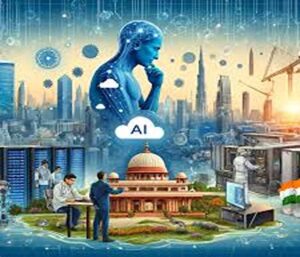
Strengthening AI Partnerships Across India
Microsoft’s latest strategic direction includes formal collaborations with prominent IT leaders such as Cognizant, Infosys, TCS, and Wipro. The goal of these partnerships is to accelerate the adoption of agentic AI within enterprise and public-sector environments. Agentic AI represents systems capable of autonomous planning, reasoning, and action—advancing far beyond traditional prompt-based models. Through these alliances, Microsoft aims to help Indian businesses build intelligent applications capable of handling complex workflows with minimal human intervention.
A Historic Infrastructure Investment
Microsoft has announced a USD 17.5 billion commitment to India’s digital infrastructure, marking the company’s largest investment in Asia to date. This monumental plan focuses on expanding Azure-powered data centre regions and enhancing nationwide cloud accessibility. Nadella highlighted the rapid growth of Microsoft’s availability zones, already established across Central India, West India, and South India, alongside a strategic cloud partnership with Jio.
Growth of Sustainable Data Centre Capacity
A major highlight of Nadella’s address was the announcement of a new data centre region scheduled to go live in 2026. This upcoming South Central region will operate with a fully sustainable model, reflecting Microsoft’s long-term environmental commitments. The company aims to ensure that energy efficiency, carbon reduction, and responsible innovation remain core components of India’s AI-powered digital expansion.
Prioritizing Digital Sovereignty and Cybersecurity
As India scales its AI adoption across sectors, Nadella underscored the critical importance of digital sovereignty and cybersecurity. He noted that Microsoft is developing flexible sovereignty solutions, enabling organizations to choose between public cloud environments or sovereign-controlled models. This approach supports data protection requirements across industries while ensuring secure deployment of emerging AI capabilities.
Engagement With India’s Business Leadership
Nadella’s India visit also included a meeting with Adani Group Chairman Gautam Adani. Their discussion centered around advancements in AI-driven applications and the convergence of digital and physical infrastructure. Nadella provided a demonstration of Microsoft’s internal AI developments, underlining the company’s focus on practical, hands-on innovation.
Commitment Following Meeting With Prime Minister Narendra Modi
Before meeting Adani, Nadella held discussions with Prime Minister Narendra Modi in New Delhi. Soon after the meeting, Microsoft announced its plan to invest USD 17.5 billion in India over 2026–2029. This investment aims to support scalable AI integration across industries, public-service systems, and the broader population. It also marks the company’s third significant AI-focused commitment in India within two months, reinforcing the country’s role as a global centre for AI-first transformation.
Moving Toward India’s AI-Enabled Future
Microsoft’s multi-layered strategy—spanning infrastructure, workforce skilling, sustainability, sovereignty, and industrial partnerships—signals a long-term vision for India’s place in the global technology landscape. As cloud regions expand, AI capabilities mature, and collaboration deepens across sectors, India is set to become one of the most influential players in shaping the future of AI-driven innovation.