Silver : at Record Highs Understanding the Surge, Market Signals, and Smart Investment Outlook
Silver: prices have recently captured global attention after reaching fresh lifetime highs, clearly outperforming gold and reshaping investor sentiment in the precious metals market. While gold has traditionally been the preferred safe asset during uncertainty, silver has emerged as the stronger performer in the current cycle. This divergence has raised important questions for investors about the forces driving silver prices, the risks involved, and whether entering the market at elevated levels is still a sensible decision.
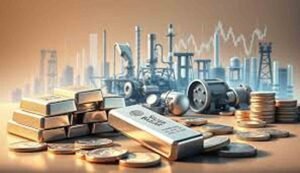
Silver Price Performance Outpaces Gold
Silver witnessed a sharp rally, touching record highs both in domestic and international markets. In contrast, gold prices remained largely range-bound, reflecting a shift in investor focus. This outperformance is significant because it highlights silver’s evolving role beyond being just a store of value. Unlike gold, silver benefits from both investment demand and expanding industrial usage, which has amplified its price momentum.
In global markets, silver crossed key psychological levels, while gold showed only modest gains supported mainly by currency movements. This widening gap between the two metals indicates that silver’s fundamentals are currently stronger, particularly due to factors unrelated to traditional safe-haven demand.
Dual Nature of Silver Driving Demand
One of the most important reasons behind silver’s strength is its dual identity as a precious metal and an industrial commodity. While gold demand is largely driven by investment, central bank purchases, and jewelry consumption, silver has become a critical input for several high-growth industries.
Silver is widely used in electric vehicles, solar panels, semiconductors, smartphones, and advanced electronics. As governments and corporations accelerate investments in clean energy and digital infrastructure, silver demand has risen steadily. This structural demand growth has created sustained buying pressure, which gold does not currently enjoy to the same extent.
Industrial Growth Meets Limited Supply
The supply side of the silver market has struggled to keep pace with rising consumption. Silver mining output has not increased meaningfully in recent years, leading to a persistent supply deficit. This imbalance between demand and availability has been one of the strongest drivers of higher prices.
Silver is now experiencing multiple consecutive years of supply shortfall, making it increasingly scarce. When combined with rising industrial demand, this scarcity creates a powerful foundation for long-term price resilience. In comparison, gold supply remains relatively stable, which partly explains its slower price movement.
Impact of US Economic Data and Interest Rates
Recent economic data from the United States has also played a crucial role in silver’s rally. A rise in the unemployment rate has strengthened expectations that the Federal Reserve could adopt a more accommodative monetary policy in the future. Lower interest rate expectations generally benefit non-yielding assets like silver, as the opportunity cost of holding them declines.
Additionally, a softer US dollar has supported commodity prices across the board. Since silver is priced in dollars globally, a weaker currency makes it cheaper for international buyers, further boosting demand. Falling bond yields have added to silver’s appeal, encouraging investors to seek alternatives that can preserve value during economic uncertainty.
Currency Movements and Domestic Factors
In markets like India, the weakness of the local currency has further amplified silver prices. Since silver is largely imported, a depreciating currency increases landed costs, pushing domestic prices higher even when global prices rise moderately. This combination of global price strength and currency impact has resulted in sharp gains in local silver markets.
From a technical perspective, analysts believe silver may experience short-term corrections after such a steep rally. However, these pullbacks are often seen as healthy and can provide opportunities for investors with a longer-term horizon.
Gold’s Role Remains Important
Despite silver stealing the spotlight, gold has not lost its relevance. Gold continues to play a vital role as a hedge against geopolitical risk, inflation, and financial instability. After a strong multi-year rally, gold prices may be more vulnerable to short-term corrections, especially if profit booking increases or if interest rate cuts are delayed.
That said, the fundamental drivers supporting gold remain intact. Central bank accumulation, global uncertainty, and long-term currency concerns continue to underpin gold demand. Rather than choosing between gold and silver, many experts recommend a balanced allocation to both metals.
Investment Strategy for Silver at Current Levels
The long-term outlook for silver remains positive due to its strategic importance in future-focused industries and its constrained supply. However, the rapid rise in prices means investors should approach fresh investments with caution. Entering the market gradually rather than chasing momentum may help manage risk.
For long-term investors, silver offers diversification benefits and exposure to global technological and energy transitions. Short-term volatility is likely, but dips may attract renewed buying interest. Investors with existing positions may consider holding through fluctuations, while new participants should focus on disciplined entry strategies.
As global markets continue to respond to economic data and central bank signals, silver’s trajectory will depend on how quickly interest rates ease and how strong industrial demand remains. For now, silver has established itself as the leading performer among precious metals, with gold following at a steadier pace.