Business : Precious Metals Open 2026 on a Strong Note After a Record-Breaking Year
Business: The global precious metals market has entered 2026 with renewed optimism, continuing the momentum built during an extraordinary previous year. Gold and silver, the two most closely watched metals, have shown early signs of stability and strength, even after brief periods of correction. Investors across the world are closely observing price movements, interest rate expectations, and broader economic signals as they reassess their strategies for the new year.
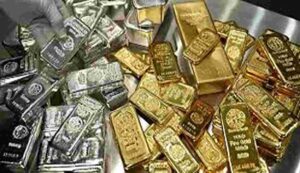
Early Market Performance in 2026
Gold prices began the year with a modest recovery after facing some pressure toward the end of December. Following a short-term decline to a two-week low, prices rebounded as buying interest emerged near lower levels. This movement reflects a familiar pattern where investors view temporary price dips as opportunities rather than warning signs. The steady opening indicates that confidence in gold remains largely intact, supported by its long-standing reputation as a store of value during uncertain times.
Silver, meanwhile, has displayed even stronger momentum at the start of the year. The metal climbed sharply in early trading sessions, reinforcing the idea that investor appetite remains strong after its exceptional performance last year. Market participants continue to track silver closely, given its dual role as both an investment asset and an industrial input.
Gold’s Remarkable Journey Through 2025
The previous year proved historic for gold, as prices surged at a pace not seen in several decades. Annual gains crossed levels last witnessed in the late twentieth century, marking a turning point for the metal in modern financial history. A combination of economic, political, and monetary factors aligned to create favorable conditions throughout the year.
One of the most influential drivers was the shift in monetary policy by the United States central bank, Federal Reserve. Interest rate reductions and expectations of further easing reduced the appeal of yield-based assets, making gold more attractive by comparison. Since gold does not provide interest income, it typically benefits when borrowing costs decline.
In addition, persistent geopolitical tensions across multiple regions encouraged investors to seek safety. Central banks also played a critical role, increasing their gold reserves to diversify holdings and reduce reliance on traditional reserve currencies. Rising participation in gold-backed exchange-traded funds further reflected growing confidence among both institutional and retail investors.
Investor Sentiment and Safe-Haven Demand
Despite some profit-taking toward the end of the year, gold managed to hold key support levels. This resilience highlights how deeply embedded the metal has become in long-term portfolio planning. Many investors view gold not just as a short-term trade, but as insurance against inflation, currency volatility, and economic shocks.
As inflation concerns remain unresolved in several major economies, gold continues to be seen as a hedge against declining purchasing power. Expectations that interest rates may trend lower over time have strengthened this perception, helping maintain stable demand even during periods of price consolidation.
Silver’s Record-Setting Performance
Silver emerged as the standout performer among precious metals in 2025, delivering gains that far exceeded those of gold. The scale of its rally was unprecedented, setting new benchmarks in price history. This strong performance has carried over into the opening days of 2026, signaling continued confidence in the metal’s long-term prospects.
Several structural factors fueled silver’s rise. Its designation as a critical mineral in the United States brought renewed attention to its importance in renewable energy, electric vehicles, and advanced electronics. At the same time, limited supply growth and declining inventories tightened market conditions. Industrial demand remained robust, while investment interest surged as prices broke through long-standing resistance levels.
Interest Rate Outlook and Policy Signals
Insights from the December policy meeting of the Federal Reserve offered clarity on the central bank’s cautious approach. Policymakers emphasized the need to balance inflation control with economic growth, leading to detailed discussions before committing to further rate cuts. Financial markets are currently anticipating multiple reductions over the course of 2026.
Lower interest rates generally favor assets like gold and silver, as the opportunity cost of holding non-yielding instruments decreases. This expectation has provided underlying support to precious metals, even during phases of short-term volatility.
Performance of Other Precious Metals
Beyond gold and silver, other metals have also started the year on a positive note. Platinum recorded strong gains following an exceptional previous year marked by record prices. Its performance was supported by supply constraints and steady industrial demand, particularly from the automotive and manufacturing sectors.
Palladium also showed upward movement, building on its best annual performance in more than a decade. Demand from vehicle emission control technologies, combined with ongoing supply challenges, kept prices elevated despite occasional fluctuations. These trends highlight the broader strength across the precious metals complex.
Outlook for the Year Ahead
As 2026 unfolds, precious metals are likely to remain in focus amid shifting economic conditions. Factors such as monetary policy decisions, inflation trends, geopolitical developments, and industrial demand will continue to shape price movements. While short-term corrections are inevitable, the long-term outlook for gold and silver appears supported by strong fundamentals.
For investors, the early performance of precious metals suggests that confidence has not faded with the turn of the calendar. Instead, the sector has entered the new year with momentum, resilience, and a renewed sense of purpose in global portfolios.