Gold Prices : Remain Strong in 2026 Amid Global Risks and Economic Uncertainty
Gold Prices: The powerful gold rally that began last year has continued well into 2026, reflecting sustained investor confidence in the precious metal. After closing 2025 with one of its strongest annual performances in decades, gold has maintained its upward momentum, reaching fresh record levels despite brief periods of correction. Ongoing geopolitical tensions, economic uncertainty, and expectations of monetary easing have all contributed to gold’s continued appeal as a reliable store of value.
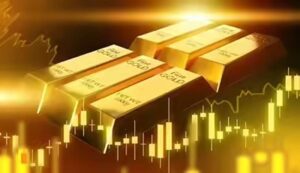
Recent Movement in Gold Prices
Gold prices recently witnessed a mild pullback after touching new lifetime highs. Spot gold eased slightly after strong buying interest pushed prices to record territory earlier in the week. This minor decline was largely attributed to profit booking by short-term investors who chose to lock in gains after the sharp rally. US gold futures also experienced a modest dip, reflecting similar sentiment across global markets.
Despite this short-term correction, market participants broadly agree that the overall trend remains intact. Temporary price declines are considered a natural part of any strong upward cycle and do not necessarily indicate a reversal in direction.
Global Political Tensions Supporting Safe Haven Demand
One of the strongest pillars supporting gold prices is persistent global uncertainty. Rising geopolitical tensions across multiple regions have made investors increasingly cautious, prompting them to move capital toward assets traditionally seen as safe havens. Trade-related threats, political unrest, and diplomatic disputes have all contributed to an atmosphere of uncertainty.
Developments in the Middle East, combined with renewed friction involving major global powers, have heightened risk perception in financial markets. When uncertainty rises, gold often benefits as investors seek protection against sudden market shocks and currency volatility.
Concerns Around the US Financial System
Confidence in the US financial system has also been tested recently, adding another layer of support for gold. A weaker US dollar and concerns over institutional independence have raised questions about long-term stability. Such concerns typically reduce appetite for riskier assets and strengthen demand for tangible assets like gold.
When trust in financial systems or currencies weakens, gold tends to perform well because it is not directly tied to any single government or central authority. This characteristic makes it especially attractive during periods of institutional uncertainty.
Expectations of Interest Rate Cuts
Another major factor driving gold strength is growing anticipation of interest rate cuts in the United States. Leading global financial institutions expect monetary policy to turn more accommodative, with multiple rate cuts likely over the course of the year. Lower interest rates generally support gold prices because the metal does not generate yield.
When borrowing costs fall, the opportunity cost of holding non-yielding assets decreases, making gold more competitive compared to bonds or savings instruments. Recent economic data indicating a softer labor market has further fueled expectations that policymakers may adopt a more supportive stance.
Performance of Other Precious Metals
The rally has not been limited to gold alone. Other precious metals have also reached record or near-record levels before undergoing short-term corrections. Silver, platinum, and palladium all experienced sharp gains followed by pullbacks as traders booked profits.
Market analysts note that these corrections are healthy and often necessary to sustain longer-term trends. In the case of silver, structural supply constraints continue to support prices, while platinum and palladium are influenced by both industrial demand and broader economic conditions.
Expert Perspective on Market Trends
Commodity analysts highlight that while volatility has increased, the broader trend for gold remains positive. Global instability continues to drive demand for hard assets, and gold is increasingly viewed as a hedge against both economic and political risk.
Experts also point out that gold and silver are being influenced by different dynamics. Gold prices are largely driven by investor sentiment and macroeconomic factors, whereas silver is also affected by physical supply shortages. This divergence explains why price movements between the two metals may not always align perfectly.
Technical factors have also played a role in recent price swings. Annual rebalancing of commodity indices often leads to temporary selling pressure, but such movements are generally short-lived and do not alter the underlying market structure.
Outlook for Investors in 2026
With gold trading near all-time highs, investors are understandably cautious about entering the market at elevated levels. While the long-term outlook remains supportive due to ongoing global risks and expectations of easier monetary policy, short-term corrections are possible.
Market observers suggest a disciplined approach, emphasizing staggered buying rather than aggressive entry at peak prices. Monitoring support and resistance levels can help investors make more informed decisions, especially during periods of heightened volatility.
As 2026 progresses, gold continues to shine as a symbol of stability in an uncertain world. Although prices may fluctuate in the near term, the fundamental drivers supporting gold remain firmly in place, making careful planning essential for investors seeking long-term value.