Volvo : Considers New Flagship Three-Row Hybrid SUV for Global Markets
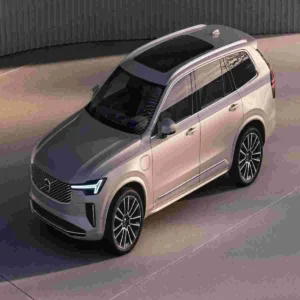
Volvo : is evaluating the possibility of introducing a new, larger three-row hybrid SUV as demand for full-size sport utility vehicles continues to rise in key global markets. The potential model would sit above the XC90 and EX90 in the company’s lineup, marking a significant step for the Swedish automaker as it reassesses customer preferences, particularly in the United States and China. While no formal decision has been taken, Volvo’s leadership has confirmed that the idea is actively under consideration.
Growing demand for larger SUVs
In recent years, several international markets have shown a steady shift toward larger SUVs that offer more space, comfort, and flexibility for families. Volvo has acknowledged this trend, noting that customers in certain regions are increasingly drawn to three-row models. Company executives have indicated that although the brand has not yet committed to developing such a vehicle, larger SUVs remain part of its ongoing product discussions.
Positioned above existing models
If approved, the new SUV would be positioned above the current XC90 and the all-electric EX90. For context, the XC90 measures roughly 4.95 metres in length, while the EX90 stretches just beyond 5 metres. Early indications suggest that the proposed model would be even longer, offering a more commanding road presence and increased interior space to compete directly with established full-size luxury SUVs.
Platform options under evaluation
Volvo has multiple technical paths it could follow for this project. One option is to leverage platforms developed within its parent company, Geely Group. Geely’s Sustainable Experience Architecture, which underpins several large and premium models, is one possible foundation. Another alternative is Volvo’s own SPA2 platform, currently used by the XC90 and EX90, which could be adapted to support a larger hybrid SUV with minimal compromise.
Focus on hybrid powertrains
Hybrid technology is expected to play a central role in Volvo’s next flagship SUV. According to company leadership, customers in Volvo’s core markets are likely to favor hybrids over fully electric vehicles in this segment, at least in the near term. Concerns around vehicle weight and the practicality of very large battery packs for long-distance use have been cited as reasons for not prioritizing a fully electric option for this particular model.
Possible powertrain configurations
While final specifications remain undecided, Volvo already has proven hybrid systems that could be adapted for the new SUV. The plug-in hybrid setup currently offered in the XC90 combines a 2.0-litre four-cylinder petrol engine with an electric motor and a battery pack, delivering strong overall performance. Alternatively, Volvo could adopt more advanced hybrid technology from within the Geely portfolio, depending on how the project evolves.
United States and China as primary markets
The United States and China are expected to be the main focus for the proposed three-row hybrid SUV. Both markets continue to show strong demand for large, premium SUVs, and Volvo already has a manufacturing presence in these regions. The company produces the EX90 in South Carolina for the US market and in Chengdu for China, giving it the flexibility to localize production if the new model moves forward.
Strategic importance for the brand
A larger flagship SUV would allow Volvo to strengthen its position in the upper end of the luxury SUV segment, where competitors have seen sustained success. By offering a hybrid alternative that balances performance, efficiency, and practicality, Volvo could appeal to customers seeking size and comfort without fully committing to electric mobility. For now, the project remains under evaluation, but it signals the brand’s intent to adapt to changing market expectations.