Fed Chair Powell Offers No Clear Signals in Reserved Economic Address
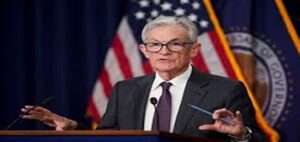
Fed Chair Powell Offers: Market watchers entered Monday evening with a mixture of curiosity and tension as Federal Reserve Chair Jerome Powell stepped onto the stage at Stanford University’s Hoover Institution. With the next FOMC meeting just days away, investors expected even the slightest hint about upcoming interest rates. But Powell quickly deflated those expectations, making it clear that his presence at the event had nothing to do with economic projections or monetary decisions. Instead, he focused solely on honoring the legacy of Reagan-era diplomat and economist George Shultz. The disappointment in financial circles was immediate, as traders had hoped for a signal—any signal—about what the Fed might do next.
A Tribute Without Teasers: Powell’s Message Stays Firmly on Track
In his opening remarks, Powell expressed deep respect for Shultz’s lifelong contributions to public service. He emphasized that he had been invited to reflect on the values and achievements of Shultz, and not to comment on the current economy. “Just to be clear,” Powell reiterated with an unmistakable firmness, “I will not address current economic conditions or monetary policy.” It was a statement that wiped away any remaining hope that he might accidentally drop a clue that markets could latch onto. For a moment, the speech felt more like a ceremonial homage than a strategic opportunity for analysts waiting for directional cues.
Dovish Winds: Markets Still Expect Another Fed Cut
Despite Powell’s silence at Stanford, the broader financial landscape continues to interpret recent Fed behavior as increasingly dovish. After two consecutive rate cuts in September and October, experts believe the central bank is leaning toward additional easing. The CME FedWatch Tool reflects this sentiment sharply, showing an 87% probability of another 25-basis-point cut at the upcoming meeting. However, Powell’s October 29 remarks still echo across the markets—his statement that a December rate reduction was “not a foregone conclusion” rattled traders, even sending Bitcoin down 3% in a single day. These comments introduced uncertainty into an environment already sensitive to every word from the Fed.

Anticipation Turns to Frustration as Powell Stays Tight-Lipped
When news broke that Powell would be speaking at Stanford’s Hoover Institution, speculation reached a new high. Analysts and investors hoped he would break his recent silence or at least offer insight that could shift the probability of a rate cut from 87% to near certainty. Instead, Powell delivered a master class in restraint, refusing to budge even slightly from his prepared remarks. His avoidance of economic discussion left those watching the event scrambling for hidden meaning that simply wasn’t there. Still, he did offer one subtle reminder—the task of managing inflation is far from simple, even for a central bank with a clear mandate.
Inflation Isn’t Easy: Powell’s Only Hint Comes Wrapped in Humor
Asked about lessons he learned from George Shultz, Powell replied that the central bank is unquestionably responsible for maintaining price stability, but achieving that goal isn’t nearly as effortless as it may appear. His comment—“It doesn’t mean it’s easy to do”—offered a rare moment of indirect insight into the Fed’s challenges. The exchange turned lighthearted when moderator Peter Robinson joked, “You make it look so easy.” Powell responded with a playful, “Yeah. That’s the trick,” prompting laughter from the audience. While humorous, the moment subtly underscored Powell’s belief in the complexity of the Fed’s role, especially when navigating the unpredictable waters of monetary policy.
Reading Between the Lines: A Market Still Hungry for Clarity
Although Powell avoided discussing real-time data, projections, or future moves, the market’s hunger for clarity intensified. Investors know the Fed’s decisions over the next several months will shape everything from job growth to consumer borrowing costs. With inflation still requiring careful oversight and global economic uncertainty lingering, Powell’s refusal to offer even indirect guidance left analysts dissecting every word of his tribute speech. But the truth is simple: the Fed Chair said exactly what he intended to say—and nothing more. His silence speaks volumes about how cautious the Federal Reserve must be when guiding policy expectations during volatile times.
What Comes Next? Investors Brace for the FOMC Decision
As next week’s meeting approaches, the financial world waits with heightened anticipation. Will the Fed deliver the widely expected 25-basis-point cut, or will Powell’s earlier warning become reality? The dilemma leaves investors, economists, and market strategists in a state of intense speculation. Despite the lack of clues from Powell’s Stanford appearance, the next FOMC statement promises to be one of the most closely watched announcements of the year. The reaction across stocks, bonds, and cryptocurrencies is likely to be swift. Until then, markets must rely on data, probability models, and Powell’s steadfast refusal to guide expectations ahead of time.
FAQ: Clear Answers to the Night’s Big Questions
Why didn’t Powell comment on interest rates?
Because the speech was strictly a tribute to George Shultz—not an economic briefing. Powell made this crystal clear from the start, avoiding any mention of the Fed’s guidance.
What were markets hoping to hear?
Investors wanted hints about potential rate cuts at next week’s FOMC meeting.
Is the Fed still expected to cut rates in December?
Yes. Markets currently price an 87% chance of a quarter-point reduction.
Did Powell offer any economic insight at all?
Only indirectly—mainly noting that controlling inflation is challenging even with a clear mandate.